01
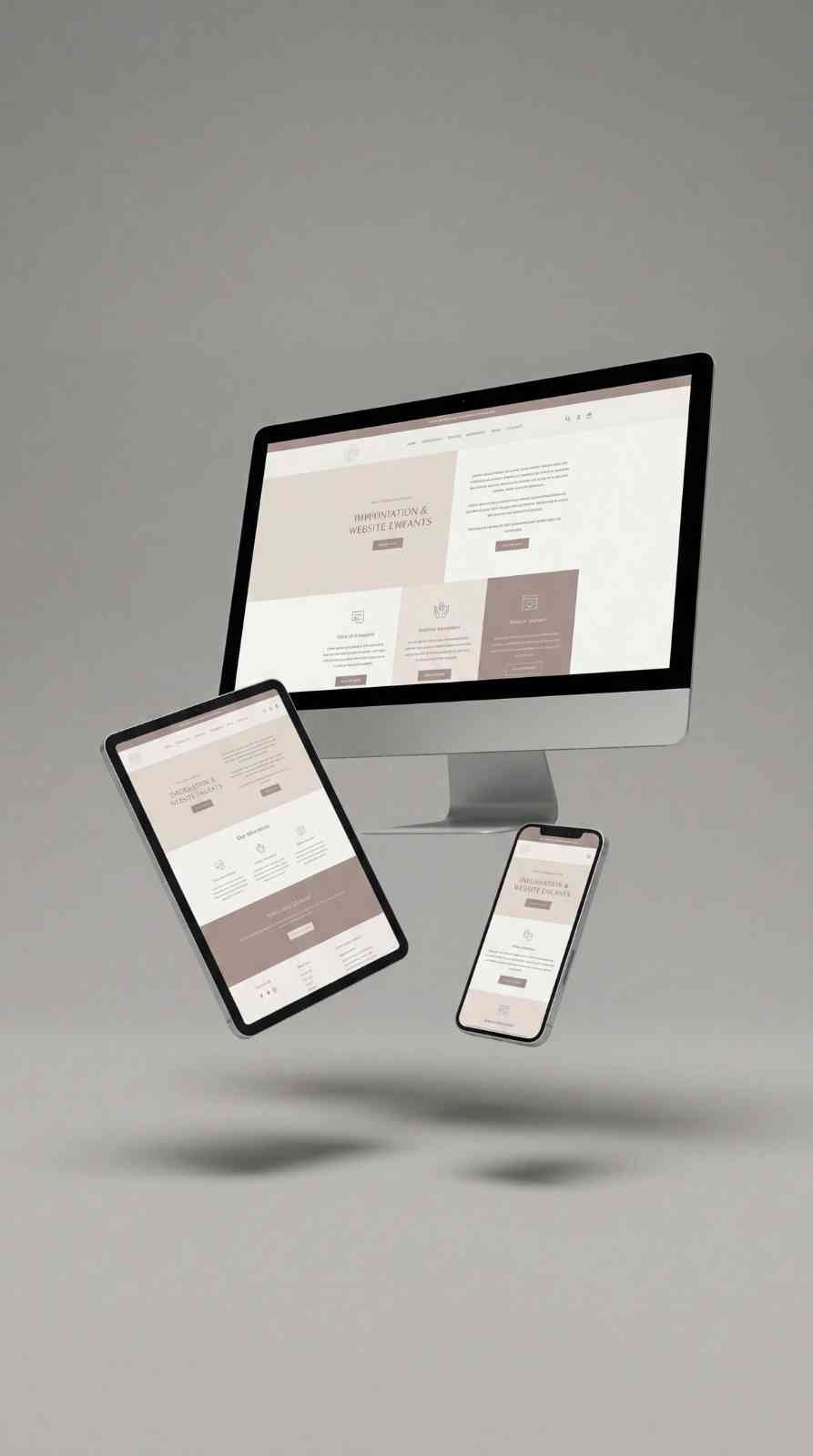
Corporate and service websites
Develop modern, responsive websites that communicate the company’s
services clearly and provide a strong technical foundation for SEO,
content, analytics, lead generation, and future expansion.
Content-management tools can be included according to the publishing
workflow.
02
Custom web applications
Build browser-based systems around unique business functions such as
requests, accounts, bookings, operations, data entry, dashboards,
customer service, or specialized workflows. The application is designed
around roles, rules, data, and integrations rather than a generic
template.
03
Customer, employee, and partner portals
Provide secure self-service access to the information and services
each audience needs. Portals can include profiles, requests, documents,
payments, approvals, status tracking, notifications, dashboards, and
connected services.
04
Mobile application development
Create iOS, Android, or cross-platform applications when the business
case requires frequent engagement, device capabilities, notifications,
offline behavior, location, camera, or a dedicated mobile journey. The
technology approach follows performance, feature, budget, and
maintenance requirements.
05
UX research and UI design
Map users, tasks, content, information architecture, journeys,
wireframes, prototypes, and interface systems before development.
Testing priority flows early reduces usability problems and unnecessary
rework.
06
Arabic, English, and RTL experience
Design the product for both languages at the structural level. This
includes language-specific URLs, navigation, metadata, typography,
right-to-left layouts, form behavior, content hierarchy, and testing—not
only translated labels.
07
API and systems integration
Connect supported ERP, CRM, payment, identity, maps, messaging,
analytics, database, or other services. The integration architecture
defines access, data ownership, validation, retries, errors, monitoring,
and the responsibilities of each system.
08
Content management and administration
Give authorized teams practical tools to manage content, users,
services, records, notifications, and other approved functions.
Administrative experiences are designed with the same attention as
customer-facing screens.
09
Performance, accessibility, SEO, and quality
Build responsive templates, optimized media, semantic HTML, crawlable
content, metadata controls, structured data, accessibility
considerations, error handling, and testing into the product. Technical
quality is part of development rather than a final checklist.
10
Maintenance and product evolution
Support can include monitoring, issue resolution, dependency and
security updates, infrastructure coordination, performance work, content
changes, feature releases, and a prioritized product backlog.